“You can go to hell without moving an inch—just focus on what you lack. You can taste heaven without leaving earth—just rejoice in what you have.” – James Clear
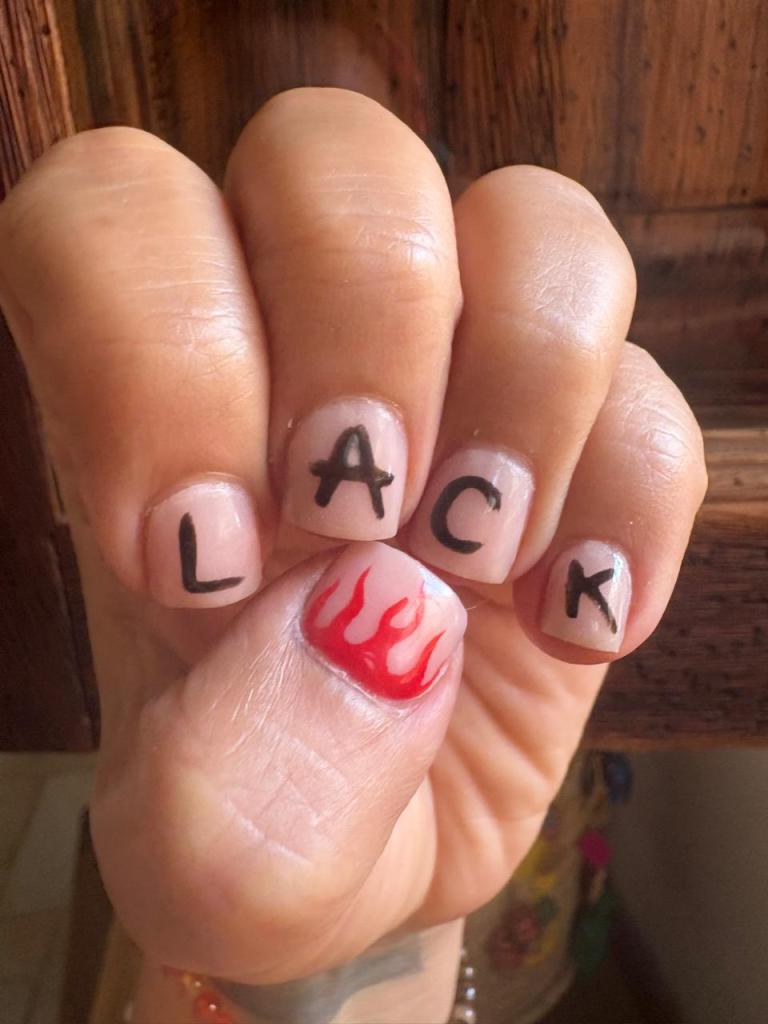
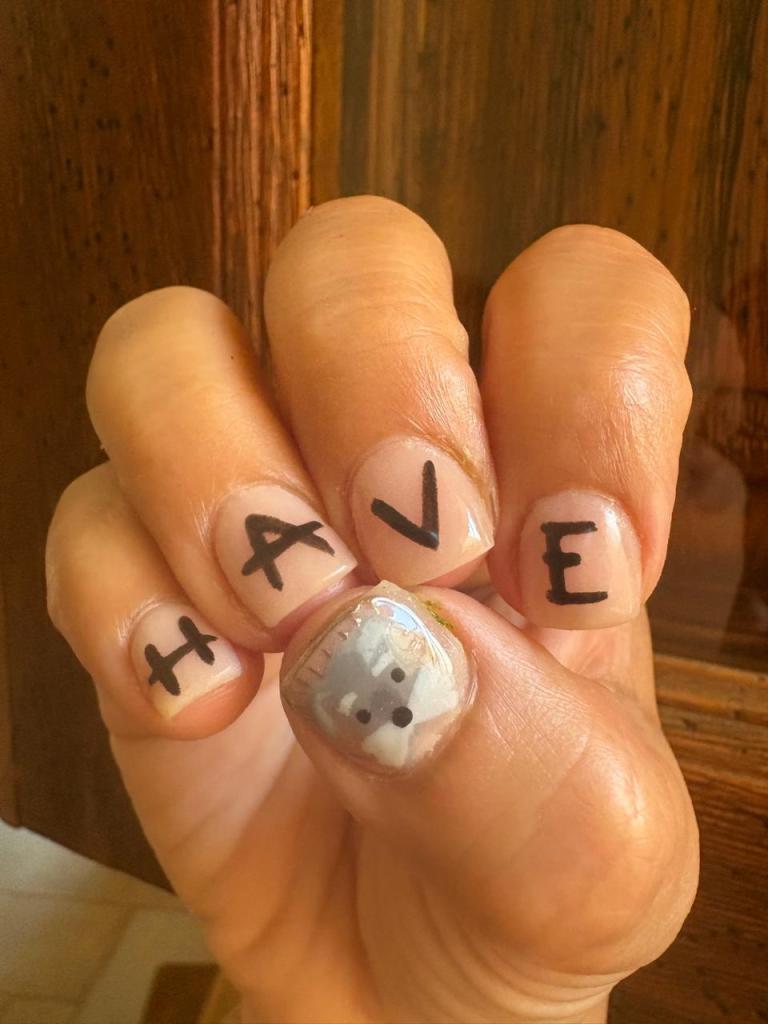
For a while now, I’ve been using my nail designs as reminders—each one carrying a lesson I want to embody or return to. This month’s nails were inspired by the quote above.
For a long time, I resented my mother for her constant need to complain—an attribute I thought was unique to her. Recently, I had family over and realized that my 85-year-old aunt has a similar way of relating to life. Whenever she brought up something that bothered her, I would try to fix it, address it, or try to make her stay more enjoyable.
I quickly learned that all she really wanted was to be heard. I guess that was her way of communicating.
Needless to say, this created a lot of inner conflict—because I’m a fixer. Our identities clashed. She didn’t want my help, and I didn’t want her complaints.
Alas, everyone survived.
And through reflection, I’ve slowly come to realize just how privileged I am.
I’m reminded of something I read in Erika Sánchez’s book Crying in the Bathroom:
“Some of my anxiety is inherited from my mother and all the women who came before us. My mother can always imagine the worst-case scenarios because of all the terrible shit she’s been through as a woman and as an immigrant. She’s experienced traumas I’ll likely never know about. Expecting the worst is a survival mechanism for her.”
I would add—not only for her, but for many of my ancestors—preparing for the worst was the only way to survive.
For most of my life, I’ve taken pride in being the kind of person you’d want with you if you were stranded on an island—because I’m always prepared. And yes, there is value in that.
But I now also see a hyper-vigilant part of me—constantly scanning, constantly aware of what could go wrong.
The difference is: I now have the tools to question that narrative.
Last year, while visiting the U.S., I signed up for health insurance—because, well, healthcare costs there are ridiculous. But as I was signing up, I had this moment of awareness: the generation before me risked their lives, crossing borders with nothing but the hope of making it out alive.
That contrast stayed with me.
I’ve been working on closing the gap between honoring where I come from (scarcity) and where I want to go (abundance).
I love my family, my culture, my roots. And at the same time, I’m beginning to question some of the long-held beliefs and inner dialogues that have shaped me.
According to my mom, nothing I ever do—or have done—will be good enough.
I’ve slowly started to untangle myself from that lie. But I’ve also felt a bit lost—because if I’m not constantly chasing perfection… then where do I go?
In The Soul of Money by Lynne Twist, I came across a mind-blowing idea.
Through her work with the Hunger Project, she interacts with people who are financially poor and incredibly abundant. And interestingly, she sees the same pattern across both worlds: a pervasive belief that “when I have enough money” or “when this project is over,” then I’ll finally be able to enjoy life or spend time with loved ones.
In both cases, she brings awareness to the fact that they already have what they need—it’s just a matter of recognizing it.
That idea hit me.
Because it’s not just about money. It applies to everything: time, energy, love.
Only by focusing on what we already have can we access the happiness we keep searching for externally.
And paradoxically, that awareness becomes the very thing that allows us to grow more of what we want… and what we already have.






 Suley
Suley 